Tag: Malaysia

  • ASEAN Summit: Beyond Borders and Hopes for Fair Inclusivity

    ASEAN Summit: Beyond Borders and Hopes for Fair Inclusivity

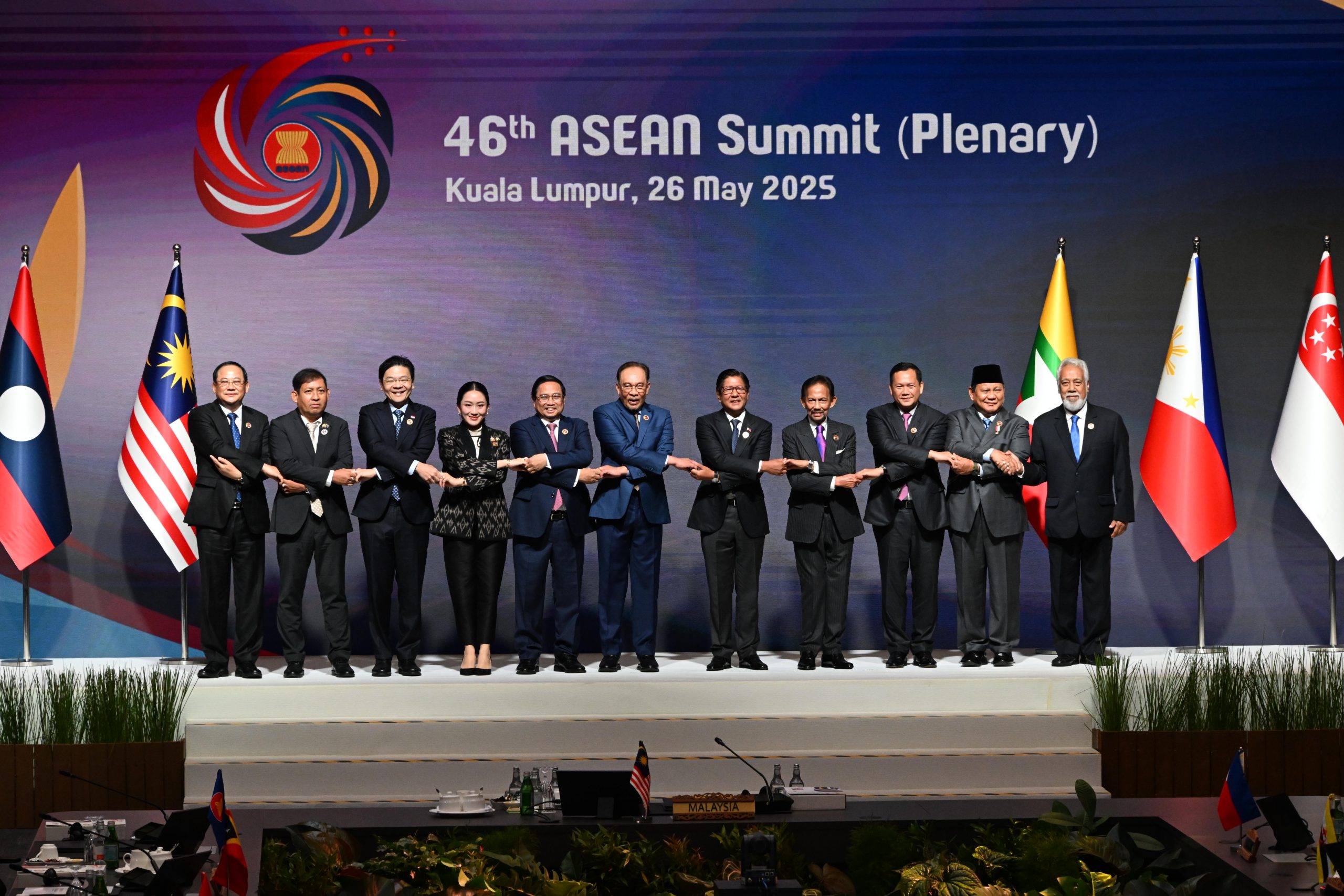
    In a time when the global order is increasingly shaped by rivalry, protectionism, and digital divides, the ASEAN Summit stands as one of the few platforms where developing nations gather not merely to defend their interests but to design their shared future. The 46th ASEAN Summit in Kuala Lumpur, Malaysia, is more than a diplomatic meeting. The summit is a reminder that Southeast Asia’s collective voice matters. It symbolizes how unity among developing nations can transcend historical boundaries, nurture inclusivity, and build a fairer regional community.

    ASEAN was never conceived as a power bloc but as a bridge between economies, between cultures, and between stages of development. Unlike many international forums dominated by major powers, ASEAN’s strength lies in its diversity. Ten countries, and to be eleven with Timor-Leste, bring unique histories, religions, and governance models under a single umbrella. This diversity, often seen as a challenge, has become ASEAN’s greatest asset. The diversity shows that peace and cooperation among developing states are not only possible but productive.

    For Southeast Asia, the concept of fair inclusivity goes beyond economics. It touches on the right of each nation, large or small, to have a voice in shaping the regional agenda. The inclusion of Timor-Leste in 2025 embodies this principle. As the region’s youngest and smallest state, its admission reflects ASEAN’s moral commitment to solidarity and development over mere strategic convenience. Inclusivity, in this context, is not charity; it is the foundation of sustainable peace and collective progress.

    The summit’s theme, Inclusivity and Sustainability, reflects the dual challenge of the 21st century: growth that benefits all and development that endures. ASEAN economies, although varied in size and structure, share similar aspirations, including modernization, digital readiness, and equitable prosperity. By fostering a shared regional identity, ASEAN helps member states collectively resist the widening global inequality gap that leaves developing nations perpetually behind.

    Strategically, ASEAN sits at one of the most vital crossroads in the world, between the Indian and Pacific Oceans, between East and West, between tradition and innovation. Its geography makes it an essential hub for trade, logistics, and supply chain resilience. But more importantly, its moral geography, its position as a neutral, peace-oriented bloc, makes it a rare model of cooperation in a fragmented world. ASEAN’s balancing act between global powers offers lessons on how small and medium states can retain agency in international affairs.

    The economic dimension of the ASEAN Summit cannot be overlooked. With a combined population exceeding 680 million and a GDP surpassing US$4.3 trillion, ASEAN is projected to become the world’s fourth-largest economy by 2030. Yet its real power lies not in its statistics but in its philosophy: growth through cooperation rather than domination. Initiatives like the ASEAN Economic Community (AEC), the Regional Comprehensive Economic Partnership (RCEP), and the ASEAN Digital Economy Framework Agreement represent steps toward that vision.

    However, inclusivity must be tested in practice, not just declared in speeches. The region’s disparities in income, digital access, and institutional capacity remain stark. Some nations are global manufacturing hubs, while others struggle with poverty and instability. The ASEAN Summit, therefore, serves as a platform for mutual learning, where successful models of governance, education, and technology can be shared and adapted across borders. The collective aim is not uniformity but shared advancement.

    Beyond economics, ASEAN carries a profound social responsibility. The region’s young population, half under the age of 35, faces an uncertain global future marked by automation and climate disruption. By prioritizing human capital, technical education, and sustainable industries, ASEAN can chart a development path that empowers its youth while respecting local identities. This approach reflects an emerging paradigm: development rooted in culture, ethics, and community.

    In addressing challenges such as the Myanmar crisis or transboundary haze pollution, ASEAN’s diplomacy emphasizes consensus and dialogue. Though sometimes criticized for its slow pace, this model prioritizes stability over coercion. It recognizes that transformation in developing societies must come through gradual institutional building, not external pressure. The ASEAN Way, based on mutual respect and non-interference, may seem cautious, but it preserves trust in a region historically scarred by colonial divisions.

    The spirit of beyond borders is not merely geographical. It signifies the psychological shift from narrow nationalism to regional empathy. When ASEAN leaders speak of connectivity, they mean more than roads or fiber cables; they speak of people’s hearts, students, workers, and entrepreneurs, linking across the archipelago and the peninsula, across faiths and languages. Every summit reaffirms that the prosperity of one nation enhances the stability of all.

    The digital economy has become ASEAN’s new frontier. With initiatives on smart cities, fintech regulation, and cross-border data flow, the region is transforming from a production zone into an innovation space. Yet digital transformation must be inclusive, bridging the rural-urban gap and empowering MSMEs. The summit discussions reflect this awareness, as leaders increasingly view technology not as an elite tool but as a public good.

    Sustainability is another pillar of the 2025 agenda. From green energy transitions to climate-resilient agriculture, ASEAN’s environmental initiatives signify a growing consciousness of collective responsibility. Developing nations, often the first to suffer climate impacts, now position themselves as proactive actors in global sustainability. The region’s renewable energy potential, from geothermal in Indonesia to solar in Malaysia, offers both economic and ecological hope.

    Beyond its institutional role, ASEAN represents a moral experiment in how developing nations can govern themselves through shared ethics. It challenges the notion that progress must follow Western models. Instead, it offers a civilizational narrative rooted in Asian values, respect, harmony, and community-driven development. These values give ASEAN’s inclusivity not just an economic but also a cultural legitimacy.

    As global politics tilt toward polarization, ASEAN’s quiet diplomacy provides an alternative vision of coexistence. Its ability to engage both the United States and China without becoming a pawn illustrates the value of collective neutrality. The bloc’s centrality in regional dialogues, from the East Asia Summit to ASEAN+3, ensures that Southeast Asian perspectives remain integral to the global agenda.

    Ultimately, the ASEAN Summit is a mirror of the region’s aspirations: a fairer, more balanced future where every nation, regardless of size, contributes to the mosaic of progress. Beyond borders means daring to imagine a community not confined by geography but bound by shared destiny. For Southeast Asia and other developing regions, ASEAN’s story is not merely just about survival. It is about the dignity of shaping one’s own future in a world too often defined by others.

  • Sumud Flotilla and the Diplomacy of the Society

    Sumud Flotilla and the Diplomacy of the Society

    The Global Sumud Flotilla has emerged as one of the strongest symbols of the new wave of “society diplomacy” in today’s deadlocked world of global deadlock on Palestinian genocide. When global governments remain trapped in rigid power plays, civil societies across continents have chosen to act directly. Activists, humanitarians, and ordinary people sailed towards Gaza, not only to deliver aid but to demonstrate that conscience must not remain silent. This journey is not just about supplies; it is a peace voyage meant to awaken the world to the urgency of the humanitarian crisis.

    At the heart of this initiative lies the world’s diplomatic paralysis, which is somehow complicated to see as a humanitarian crisis. On one side, Arab and Muslim countries continue to call for a ceasefire and the end of occupation, yet their voices are often fragmented by regional and national agendas, focusing more on security calculations. On the other side, Israel and the United States persist in negotiations shaped by their strategic self-interest, control, and domination alliances rather than on genuine humanitarian concerns. This imbalance has turned international diplomacy into a theatre of power, where human suffering is sidelined once more by the same ethical crisis among leaders and superpowers.

    In such a setting, humanity is the greatest casualty. For the people of Gaza, daily life under blockade and bombardment represents the harshest form of collective punishment. Israel’s narrative of defense cannot justify the deprivation of food, medicine, water, and electricity to millions of civilians. International law is clear: collective punishment is prohibited. What is taking place is not defense but the systematic erosion of human dignity, carried out in full view of a hesitant global community, something that a long time ago vanished and is rising once more today in high-tech civilization.

    This is why societal diplomacy becomes so crucial. The flotilla was not organized by governments or states, but by networks of NGOs, humanitarian coalitions, social actors, and committed volunteers. It is society, not the state, that has raised its hand to say “enough.” Through this initiative, ordinary people are proving that the moral responsibility for peace does not rest solely with political elites. It also belongs to communities of conscience who cannot watch injustice unfold without action.

    Yet, instead of welcoming this effort, Israel intercepted the ships, arrested the activists, and criminalized their mission. Participants were branded as security threats or even linked to terrorism. Such a reaction exposes the deep insecurity of an occupying power that fears solidarity as much as resistance. If bringing food, medicine, and compassion is called terrorism, then the moral compass of that civilization has truly lost its direction.

    The response of the United States also reveals the contradictions of modern diplomacy. While the US speaks of humanitarian corridors and peace negotiations, it simultaneously shields Israel from accountability. By framing the flotilla as a “provocation” rather than a humanitarian call, Israel once again objects to the universal principles of kindness and human rights. This selective diplomacy highlights the bankruptcy of a system that still operates through colonial logics of domination.

    Even if the humanitarian aid carried by the flotilla has not yet reached Gaza’s refugees, the moral intention behind it has already resonated across the world. The determination of hundreds of activists from dozens of countries has sparked global conversations, drawing attention to the blockade and occupation. Their voyage has turned into a story of courage, solidarity, and moral clarity. It shows that when governments remain silent and try to do kind diplomacy, civil society can become the loudest voice for justice.

    The Sumud Flotilla has already achieved its destination. It has awakened the conscience of millions, redefined what diplomacy can mean, and strengthened the global call for freedom and justice. It has been shown that diplomacy is not the monopoly of states; it is also the practice of people who act in solidarity with one another. This is the true power of society diplomacy, an act of conscience that refuses to be silenced.

    Society diplomacy, therefore, offers a new pathway when official diplomacy collapses. It demonstrates that in moments of political deadlock, ordinary people can step in to lead moral and humanitarian agendas. The Sumud Flotilla is not merely symbolic; it represents a living example of how global communities can organize transnational action to put pressure on power structures, to reshape public opinion, and to bring dignity back into the discourse of international relations.

    The broader lesson is that colonialism, in all its forms, must be erased from the modern world, as stated in many national declarations and statutes. The Palestinian struggle is not an isolated case; it is a mirror reflecting unfinished struggles of decolonization and human rights. As long as the occupation continues, the credibility of global governance remains in question. The flotilla reminds us that colonial structures are not relics of the past but present realities that demand collective resistance.

  • Privacy Poverty – Lessons for Malaysia’s Digital Future?

    Privacy Poverty – Lessons for Malaysia’s Digital Future?

    Privacy in the digital age is often discussed as a universal right, but in reality, the poor face very different challenges in exercising it. “Privacy poverty” refers to the unique vulnerability of those living in poverty or unprivileged circumstances, who are often forced to surrender personal information simply to access aid, services, or recognition. Far from being indifferent, poor communities make difficult trade-offs, choosing between visibility for survival and the preservation of their personal boundaries.

    This reality was captured powerfully by a group of researchers in India who studied the country’s Aadhaar national biometric system—the world’s largest digital identity program. Their article, “The Poverty of Privacy: Understanding Privacy Trade-Offs From Identity Infrastructure Users in India”, revealed how people with low income often compromise privacy to gain access to essential benefits. Many gave up data regardless of the credibility of the collector, the clarity of purpose, or the existence of safeguards, fearing exclusion if they declined. The study also highlighted that even in poverty, individuals care about privacy—they calculate when to give up visibility and when to protect their information. This confirms that privacy is not a luxury, but a right that the poor value as much as the affluent.

    Malaysia today faces a moment where this lesson is highly relevant. In recent years, the government has introduced or updated major legal instruments to strengthen data governance and security. The amendment to the Personal Data Protection Act 2010 [Act 709], the new Cyber Security Act 2024 [Act 854], and the Data Sharing Act 2025 [Act 864]. Alongside these, the Ministry of Home Affairs recently tabled the National Registration (Amendment) Bill 2025, which aims to give statutory recognition to MyDigital ID as a valid identification document.

    MyDigital ID has sparked much debate on privacy and security. While its framework ensures that personal data is only verified against government databases and not retained by MyDigital ID itself, public concerns remain. Expanding biometric data collection raises questions about consent, purpose limitation, and safeguards—issues that disproportionately affect those in vulnerable or low-income groups.

    Here lies the lesson from India: building digital identity systems is not only about security and efficiency but also about protecting the dignity of those who cannot afford to “trade” their privacy. Malaysia’s strong legal foundation must now be matched by deliberate policies that:

    • Ensure informed consent is genuine,
    • Limit the use of personal data strictly to its intended purposes, and
    • Build credible safeguards that reassure all citizens—especially the poor—that their data will not be misused or exposed.

    It may be inappropriate to directly compare India’s Aadhaar system with Malaysia’s MyDigital ID, given their different purposes and designs. But acknowledging privacy poverty is not about rejecting MyDigital ID. It is about ensuring that digital transformation protects the most vulnerable, recognising them not merely as data subjects but as rights-bearing individuals. Safeguarding privacy in contexts of poverty is not an act of charity—it is an act of justice.

  • What’s next in Malaysia’s democracy sequence?

    What’s next in Malaysia’s democracy sequence?

    Malaysian democracy entered a new phase after the appointment of a new government promising the restoration of justice and rule of law in place of 61 years of Barisan Nasional rule. What model will shape our democracy now? Will it be a better democracy? The word democracy, from demos means “common people” and kratos means “strength”. It is no surprise then that “people’s power” or “from the people to the people” is one of democracy’s buzzwords. Despite the intriguing definitions, critics say democracy was built upon enslavement and discrimination when Athens’ aristocrats denied slaves, women and foreign residents from taking part. For approximately 1.3 million Indian soldiers who served the British Empire during the First World War to fight tyranny and depression against Germany occupation, it was paradoxical that India had been under colonial British rule for nearly 200 years!

    A possible pathway for an emerging democracy is democratic sequencing, an idea to increase the likelihood of democracy being a success, consists of 2 prerequisites: state-building and liberal constitutionalism; rule of law. This idea advocates that for democratisation to succeed initially the rule of law must be upheld and state institutions must be stable and neutral. In the past, political disagreements often provided ample opportunities for political extremist groups to emerge and take action against others with different political ideologies using violence, threats and physical abuse. The response from the authorities were often late and selective. Groups like the Red Shirt group and political stunt master Dato Jamal Yunos must no longer be allowed to take the law into their own hands. State institutions such as enforcement agencies must work within the boundary of the Constitution. Unlawful detention and hostile techniques that cost the lives of Teo Beng Hock and Ahmad Sarbani should never be part of interrogation tactics in the future . Intellectual discourses on various political and social issues must be allowed from the bottom to the highest level especially in academic environments such as universities.

    With these, together with mechanisms and features such as clean and fair elections, the segregation of powers, political plurality and diversity in civil society entities only then will it bring true democratic substance and results. The Pakatan Harapan (PH) government and the  opposition parties in Parliament, mainly UMNO have a huge tasks to make this a reality and it is hugely important that every leader is enlightened and committed to democracy and respect for the rule of law. On a final note however, we must also remind ourselves that there are many others posing as reformers and paying tribute under the name of democracy as a means to pursue personal gains.